

TL;DR
- Electrolytes help recovery mainly by restoring fluid balance, minerals and muscle function, which can ease fatigue, cramping and headaches when you are low on them.
- L-theanine supports recovery on the mental side, promoting calm focus and helping you unwind so your body can repair, but it does not rebuild muscle by itself.
- Pairing electrolytes and L-theanine with antioxidant support like SOD B from Melorun can support how you feel after repeated physical and lifestyle stress, but results are gradual, not dramatic overnight.
Feeling wiped after workouts, sore longer than you used to, or dragging through the afternoon even when you drink plenty of water is frustrating. You might be wondering if adding electrolytes and L-theanine will actually help you bounce back, or if they are just another wellness trend.
This article shares general information only and is not medical advice. Talk with your healthcare provider before making changes to your supplements, especially if you have health conditions, take medication or are pregnant or nursing.
We design our SkinSips formulas around this exact question. Below, we will break down how electrolytes and L-theanine each support different layers of recovery, where antioxidant support like SOD B from Melorun fits in, and how to use them in a realistic routine without overpromising results.
Do electrolytes and L-theanine really help recovery? (short answer)?
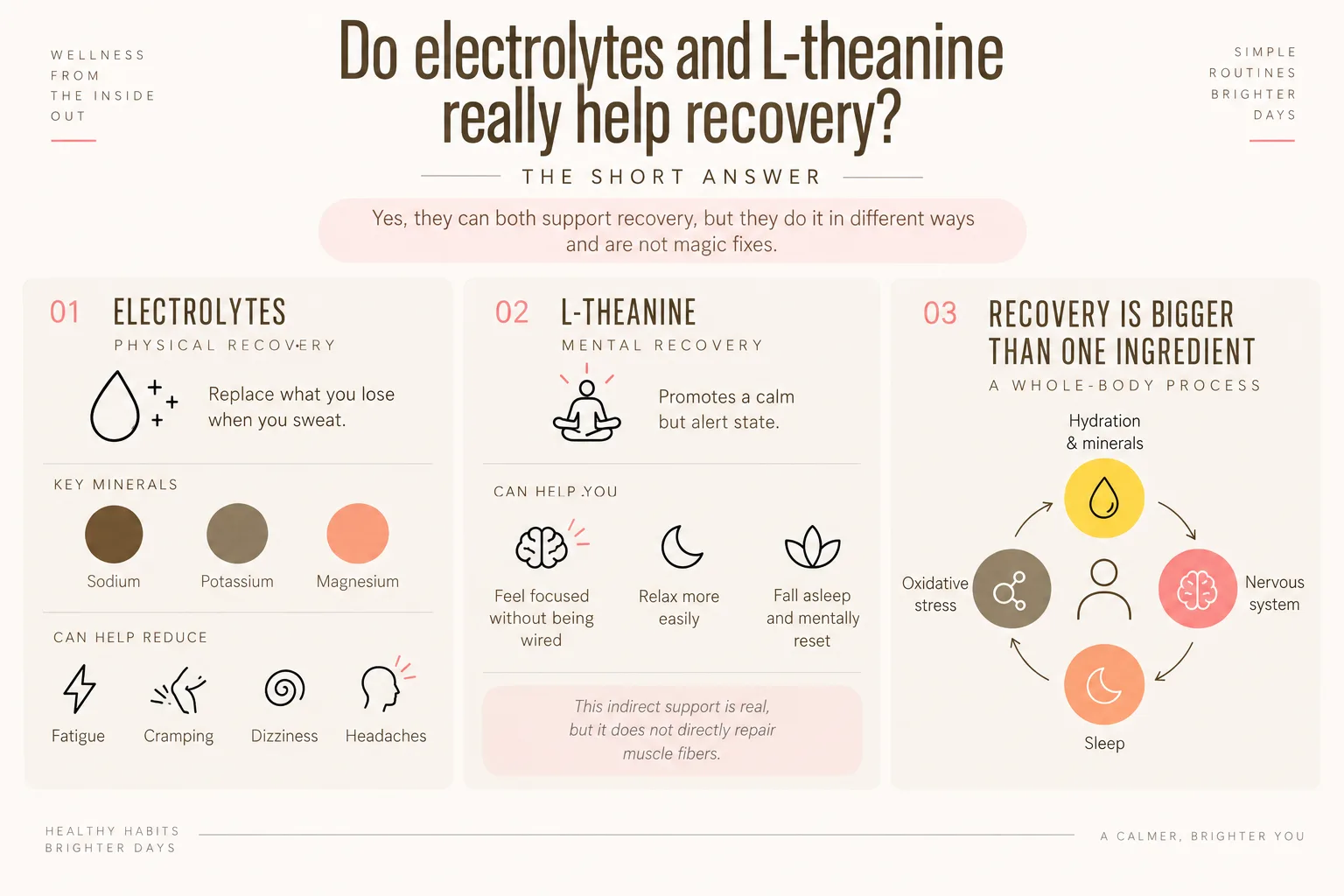
Yes, electrolytes and L-theanine can both support recovery, but they do it in different ways and are not magic fixes.
Electrolytes mainly support the physical side of recovery. When you sweat, you lose water and charged minerals like sodium, potassium and magnesium. If you do not replace them, you are more likely to feel heavy fatigue, cramping, dizziness or headaches. When electrolyte levels were low to begin with, getting enough of them can noticeably reduce cramps and post-workout fatigue and help you feel more “normal” the next day.
L-theanine works more on your nervous system. It promotes a calm but alert state, which many people describe as feeling focused without being wired. By taking the edge off stress and mental tension, it can make it easier to relax, fall asleep and mentally reset between workouts or long days. That indirect support is real, but it does not directly repair muscle fibers.
Recovery is a whole-body process. Hydration and minerals, your nervous system, sleep, and oxidative stress all interact. The rest of this article unpacks how these ingredients fit into that bigger picture.
What recovery actually means for your body?
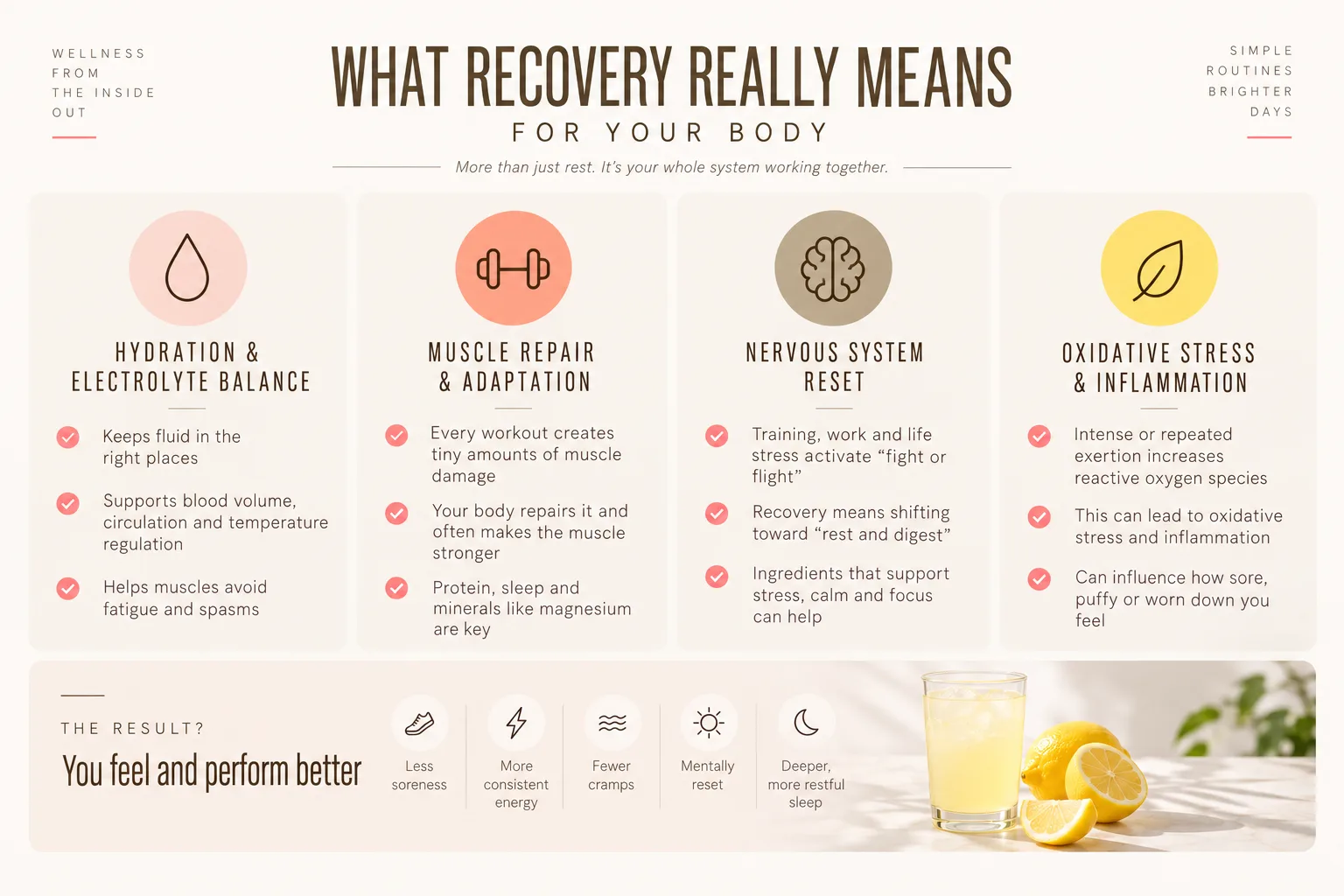
When you say you want “better recovery”, you probably are not thinking about a lab value. You mean very practical things:
- Less soreness so you can move comfortably the next day.
- More consistent energy, rather than feeling great for 2 hours then hitting a wall.
- Fewer cramps or “charlie horses” disrupting your workout or sleep.
- Feeling mentally reset instead of wired, edgy or foggy.
- Sleeping deeply enough that you wake up feeling restored rather than stiff and groggy.
Under the surface, several systems are working together:
- Hydration and electrolyte balance
Water is stored inside and outside your cells, and electrolytes keep that fluid in the right places. If you are underhydrated or low on minerals, your blood volume, circulation and temperature regulation all suffer. Muscles tire faster and spasm more easily.
- Muscle repair and adaptation
Every workout creates tiny amounts of muscle damage. Your body repairs that damage and often makes the muscle stronger. Protein, sleep, and adequate minerals like magnesium are key here.
- Nervous system reset
Training, work and life stress all stimulate your “fight or flight” systems. Recovery requires shifting back toward “rest and digest”. This is where ingredients that affect stress, calm and focus can matter, even if they do not touch muscle tissue directly.
- Oxidative stress and inflammation
Intense or repeated exertion increases the production of reactive oxygen species in muscle and connective tissue. This contributes to oxidative stress and inflammation, which can influence how sore, puffy or worn down you feel after training or busy days.
Electrolytes fit mainly into the hydration and muscle function bucket. L-theanine fits into the nervous system reset bucket. Antioxidant support like SOD B from Melorun speaks to the oxidative stress side. None of these replace the basics (food, sleep, programming your training), but they can make those basics work better.
How electrolytes support recovery?
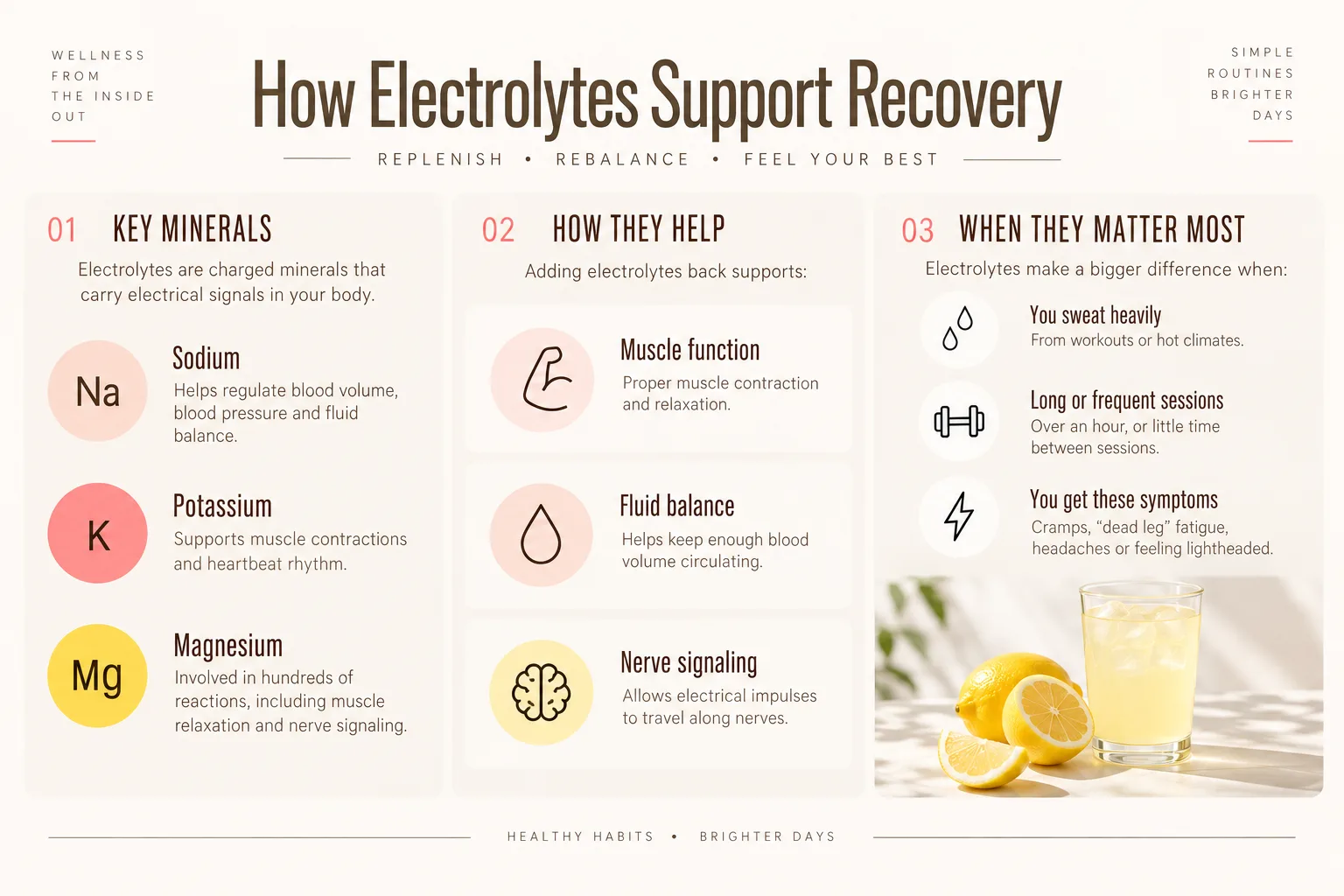
Electrolytes are charged minerals that carry electrical signals in your body. The main ones for recovery are:
- Sodium, which helps regulate blood volume, blood pressure and fluid balance.
- Potassium, which supports muscle contractions and heartbeat rhythm.
- Magnesium, which is involved in hundreds of reactions, including muscle relaxation and nerve signaling.
During exercise or heat exposure, you lose water and electrolytes through sweat. If you only replace the water, you can dilute what is left and still end up with an imbalance. That is where symptoms like:
- Muscle cramps or twitching
- “Dead leg” fatigue
- Headaches after workouts or sauna sessions
- Feeling lightheaded when you stand up
can start to show up.
When you add electrolytes back, you support:
- Proper muscle contraction and relaxation
Sodium and potassium help muscles fire. Magnesium helps them relax. If magnesium is low, muscles may have trouble letting go after a contraction, which is one reason supplementation can help with cramping when your baseline intake is low.
- Fluid balance and circulation
The right mix of sodium and water helps keep enough blood volume circulating so oxygen and nutrients move efficiently to muscles and organs.
- Nerve signaling and coordination
Electrolytes allow electrical impulses to travel along nerves. Balanced levels help maintain coordination, reaction time and a sense of steadiness during and after workouts.
When do added electrolytes make a meaningful difference?
Electrolytes matter most for recovery when:
- You sweat heavily from workouts or hot climates.
- You notice salt on your skin or clothing after training.
- You struggle with frequent cramps, especially at night or late in workouts.
- You get post-workout headaches even though you drink water.
- You do long sessions (over an hour) or multiple shorter sessions with little time between them.
If your training is light, mostly indoors, and you rarely sweat heavily, you may not need an electrolyte drink every day. In those cases, a focus on magnesium plus staying on top of day-to-day hydration can be enough.
Why can sea mineral sources appeal?
Some electrolyte products use minerals derived from sea sources. For readers who care about trace minerals, products built from sea minerals can offer a broader spectrum of electrolytes and trace elements that support fluid balance and muscle function. If you want to know more about how these trace minerals support hydration and balance, we have a separate explainer on why electrolytes from sea minerals matter for hydration and balance.
How L-theanine can aid mental and physical recovery?
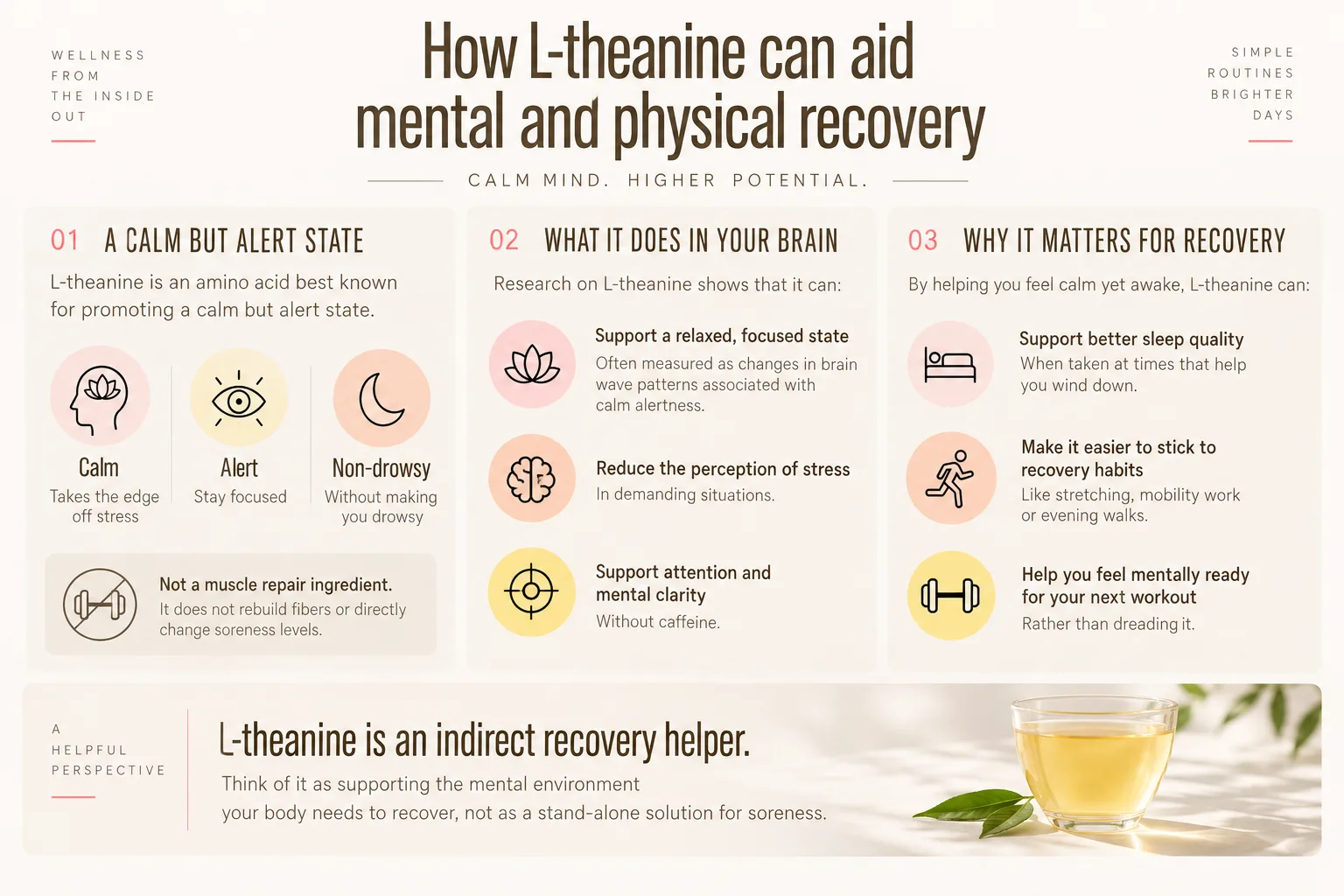
L-theanine is an amino acid best known for promoting a calm but alert state, often described as taking the edge off stress without making you drowsy.
It is not a muscle repair ingredient. It does not rebuild fibers or directly change soreness levels the way protein intake or training adjustments might. Instead, its value for recovery comes from its effects on your brain and stress response.
What does L-theanine do in your brain?
Research on L-theanine shows that it can:
- Promote a relaxed, focused state, often measured as changes in brain wave patterns associated with calm alertness.
- Reduce the perception of stress in demanding situations.
- Support attention and mental clarity without caffeine.
Subjectively, many people experience:
- Less “tired but wired” feeling in the evening.
- Easier time winding down after intense training or a long workday.
- Better focus on tasks or training sessions without jitteriness.
Why does that matter for recovery?
Recovery is much more effective when your nervous system can move out of high alert. If you finish an evening workout, rush through dinner, then collapse into bed still buzzing with thoughts, your body gets less chance to shift into repair mode.
By helping you feel calm yet awake, L-theanine can:
- Support better sleep quality when taken at times that help you wind down.
- Make it easier to stick to recovery habits like stretching, mobility work or evening walks instead of zoning out in front of a screen.
- Help you feel mentally ready for your next workout rather than dreading it.
We have a deeper dive on this ingredient in our article on L-theanine benefits for calm focus and recovery if you want more detail.
The key is expectation setting: L-theanine is an indirect recovery helper. Think of it as supporting the mental environment your body needs to recover, not as a stand-alone solution for soreness.
Where antioxidant support like SOD B from Melorun fits into recovery?
This contributes to oxidative stress and inflammation that can affect how you feel after training.
Your body has its own antioxidant defenses, including enzymes that neutralize these reactive molecules. One of those enzymes is superoxide dismutase, often abbreviated SOD.
Melorun is a branded ingredient designed to support the body’s antioxidant defenses. According to its supplier, Melorun is a 100% natural, non-GMO Cantaloupe melon juice concentrate with a patented protective coating, used at a low 40 mg dose. You can read more about the ingredient itself on the Melorun page from Robertet, its developer, at robertet.com.
What did the human clinical trial on Melorun find?
A human clinical trial on Melorun, published by Saby et al. in the *International Journal of Environmental Research and Public Health* in 2020 (17, 1142), looked at adults dealing with modern lifestyle stresses.
Key design details:
- Randomised, double-blind, placebo-controlled.
- 41 volunteers aged 30 to 53 years (mean age 38.8) were enrolled.
- 3 were excluded during the study, so 38 completed it.
- Participants took 40 mg per day for 8 weeks.
Compared to placebo, those taking Melorun experienced:
- A 6% increase in SF-36 physical well-being scores versus 2% in placebo (p < 0.001).
- A 13% reduction in physical fatigue (Prevost score) versus 7% in placebo (p < 0.1).
- A 3.6% increase in plasma magnesium versus a 1.2% decrease in placebo (p < 0.05).
- A 9% increase in oxidative defence (globular KRL) versus a 10.8% decrease in placebo (p < 0.1).
- A 36% reduction in inflammation marker CRP versus a 109% increase in placebo (p < 0.05).
These are group averages over 8 weeks, and they give an idea of how supporting antioxidant defenses and inflammation may influence physical well-being and fatigue over time. They do not mean everyone will feel a specific result.
There are also preclinical (animal) data on Melorun in eccentric exercise models, showing:
- Muscle fibrosis reduced by 38% (p < 0.05).
- Muscle fibre diameter increased by 9% (p < 0.01).
- Fast-twitch to slow-twitch myosin conversion increased by 250% (p < 0.1).
Because these are animal findings, they point to possible mechanisms but do not directly translate to humans.
A consumer study, not a clinical trial, followed 9 professional volleyball players for 10 weeks. Reported changes included:
- Sport-specific stress reduced by 27%.
- Emotional stress reduced by 28%.
- Mental weakness reduced by 28%.
This consumer study is descriptive and publication is pending, so it should be viewed as early, supportive information rather than definitive proof.
There is also a separate double-blind placebo-controlled study by Milesi, Lacan, Brosse, Desor and Notin (Nutrition Journal 8:40) in 70 active urban adults, where there was a 61% decrease in pain and muscular tensions after 4 weeks of supplementation (FARD scale, somatic pole).
What does this mean for your recovery?
Taken together, these data suggest that supporting antioxidant defenses and inflammation with an ingredient like SOD B from Melorun can:
- Support physical well-being and perceived fatigue over weeks.
- Help your body cope with repeated physical and lifestyle stress.
- Influence blood markers related to oxidative defense and inflammation.
This is gradual support, not a quick fix for extreme soreness. It fits best as part of an ongoing recovery foundation, alongside hydration, nutrition, training balance and sleep. For a deeper look at how Melorun connects to training stress, we explore that in more detail in our article on how Melorun supports athletic recovery.
Do you need both electrolytes and L-theanine for recovery, or is one enough?
You may not need both all the time. The better question is: where is your weakest link right now?
When should you prioritize electrolytes and magnesium?
Electrolytes and magnesium usually offer the most tangible first step if you:
- Sweat a lot through training, hot yoga, outdoor runs or living in a hot climate.
- Get cramps during or after workouts.
- Have post-workout headaches or feel wiped out even after drinking water.
- Notice that your urine is very dark or that you rarely feel thirsty but often feel tired.
In these cases, starting with electrolytes plus magnesium can give faster, more obvious physical relief. If your routine is currently “water only,” this is often the biggest upgrade.
When should you prioritize L-theanine?
L-theanine may deserve top billing if you:
- Feel mentally exhausted, anxious or on edge more than physically sore.
- Have trouble winding down after evening workouts or late workdays.
- Sleep but do not feel mentally refreshed.
- Find your mind racing, even when your body is tired.
For you, a calmer nervous system can unlock better quality rest, which then supports everything from hormone balance to muscle repair.
When do both together make sense?
Using electrolytes and L-theanine together can be helpful when:
- Your days are physically demanding and mentally packed.
- You train in the morning but stress stays high through the afternoon and evening.
- You are in a season of more intense training and more life load (busy work season, parenting, travel).
In this case, electrolytes and magnesium help your muscles and hydration status, while L-theanine helps your brain and stress response.
When is neither a priority?
If you:
- Rarely exercise intensely or sweat heavily.
- Sleep well and feel mentally steady.
- Do not struggle with cramps, headaches or lingering fatigue.
Then your recovery “ROI” may be higher from focusing on training variety, food quality and sleep habits. Supplements can still be a nice-to-have, but probably are not essential.
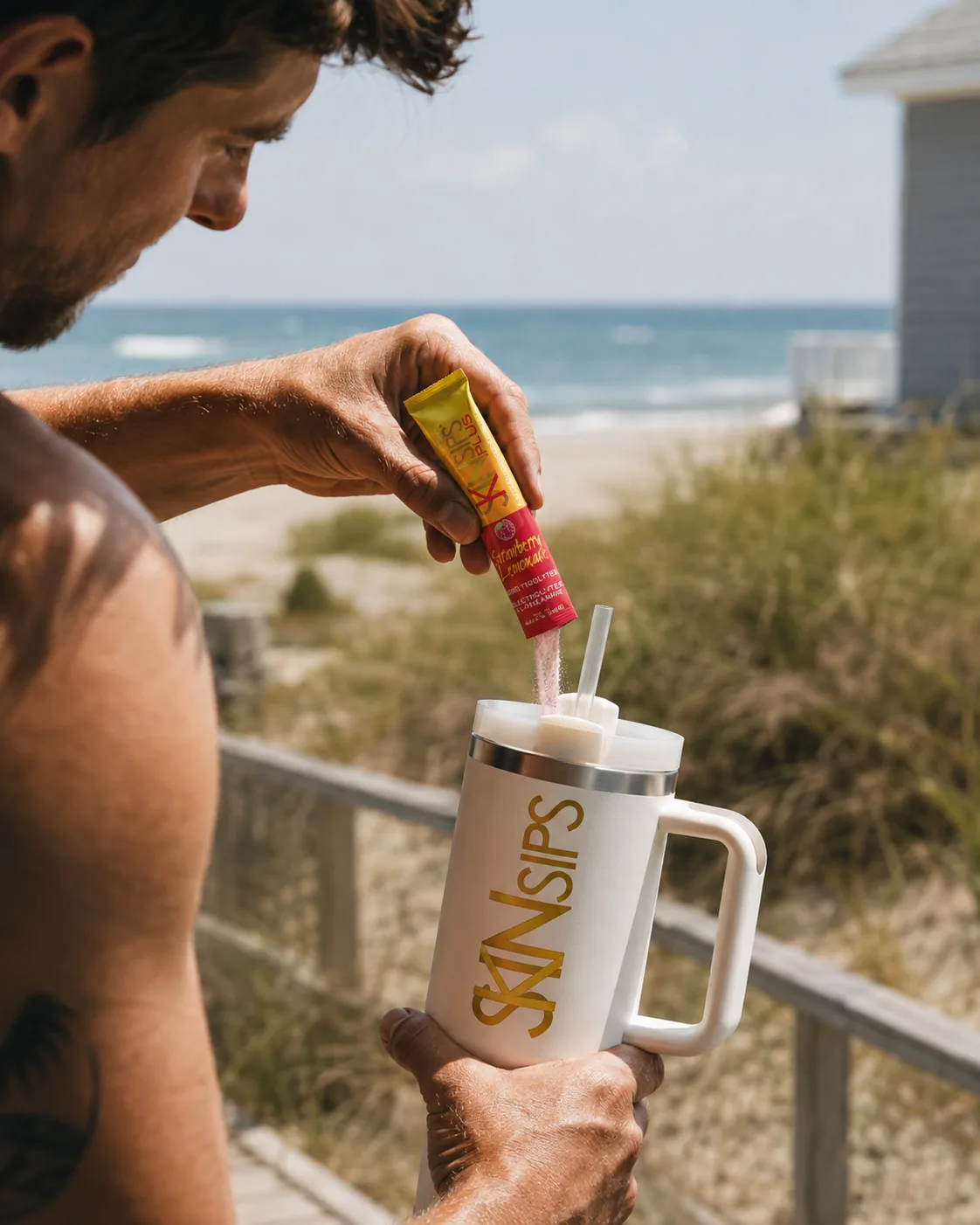
How SkinSips Plus combines electrolytes, L-theanine and SOD B Melorun for recovery support?
SkinSips Plus is built around three pillars relevant to recovery:
- Electrolytes and magnesium from sea minerals for hydration and muscle function.
- 180 mg of L-theanine for calm focus.
- SOD B Melorun for antioxidant support.
On top of that, SkinSips Plus includes Sunfiber prebiotic fiber for gut health and absorption support. The formula is plant based, non-GMO, sugar free, caffeine free, has no artificial flavors, is vegan, gluten free and made in the USA. Our production is GMP certified, and our women owned business is led by our founder Mary Rankin and an all female team.
SkinSips Plus provides 14,000 IU of SOD B Melorun French melon concentrate. This brings the human and preclinical science you read about earlier into a ready-to-mix drink format alongside hydration and nervous system support.
Here is how those pillars map back to your recovery needs:
- If you are losing a lot of fluids and minerals, the magnesium plus electrolytes from sea minerals support hydration and muscle function, which is where many women feel the fastest difference, especially with cramping or post-workout slumps.
- If you feel overstimulated or mentally scattered, the 180 mg of L-theanine is there to help promote calm focus and a smoother transition from “go mode” to “recover mode”.
- If you are stacking tough workouts with a demanding life, SOD B Melorun provides targeted antioxidant support as part of your daily routine, aligning with human and animal data suggesting benefits for oxidative defense and perceived fatigue over time.
We walk through more of the formulation details and rationale in our breakdown of the science behind SkinSips Plus if you enjoy digging into ingredient labels.
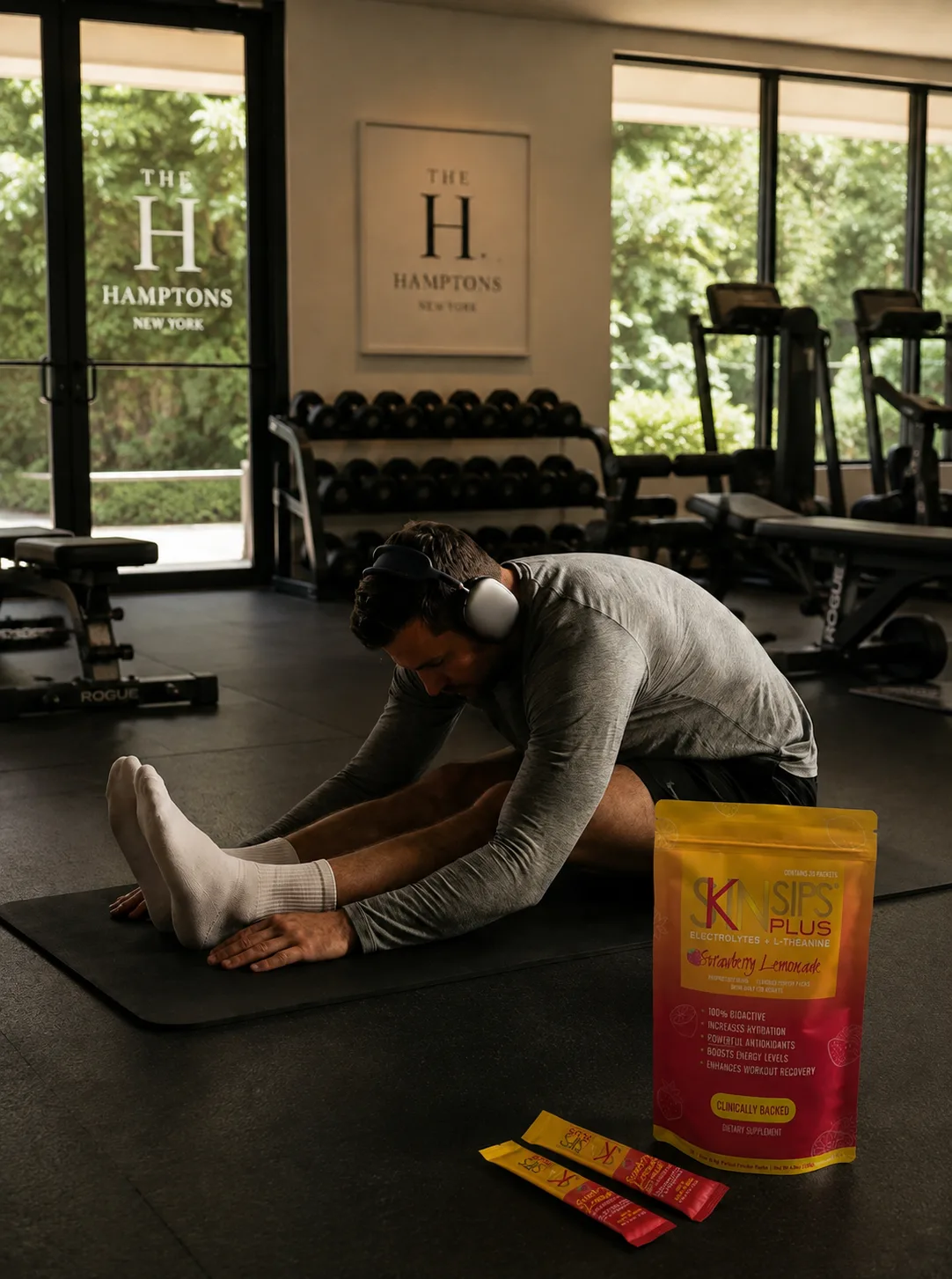
How to fit electrolytes and L-theanine into your recovery routine?
Recovery support works best as a consistent habit, not a once-in-a-while rescue. The key is to attach it to moments that already exist in your day.
Here are practical ways to use electrolytes and L-theanine, whether you use SkinSips Plus or another product with similar ingredients:
1. Around workouts
Choose one primary “anchor” for your drink:
- Pre-workout (30–60 minutes before):
Helpful if you tend to start sessions a bit underhydrated or train in the heat. Electrolytes and magnesium are in your system when you begin, and L-theanine can support focused, calm training.
- Immediately post-workout (within 30 minutes):
Good if you arrive at the gym already hydrated but tend to rush out afterwards. A post-workout drink can help you replace fluid and minerals you just lost while starting to wind down mentally.
Pick the timing that fits your real routine best. A post-workout drink that you actually remember is better than an ideal-but-forgotten pre-workout plan.
2. On non-training or lighter days
You can still use an electrolyte plus L-theanine drink on days off, especially if:
- You have a high-stress workday or a long travel day.
- You wake up feeling slightly “hung over” from the previous day’s effort.
- You want to support hydration and calm focus at your desk.
On these days, many people like a mid-morning or mid-afternoon time, which can smooth out energy dips without relying on more caffeine.
3. Evening wind-down (if caffeine free)
Because SkinSips Plus is caffeine free, some people place it in their early evening routine, for example:
- After a sunset walk or light mobility session.
- With dinner or just after, as part of their wind-down.
If L-theanine helps take the edge off your evening mind chatter, that can support better-quality sleep, which then improves recovery the next day. Pay attention to how you personally feel; timing can be adjusted.
4. Consistency over perfection
A few realistic tips:
- Start with 1 serving per day at a consistent time. Let that become automatic before layering more complexity.
- Pair it with an existing cue: gym bag, lunch break, commute, or your nightly skincare routine.
- Listen to your body. Track things like soreness, cramps, sleep quality and “morning readiness” across a few weeks.
And remember, supplements sit on top of the basics. Aim for:
- Enough total fluids across the day.
- Adequate protein and colorful plant foods.
- Training that has harder and easier days built in.
- A sleep schedule that gives your body time to repair.
We created our drinks to slide into real routines, not replace them.
Key takeaways: when electrolytes and L-theanine are worth it for recovery
If you only remember a few points from this article, make it these:
- Electrolytes and magnesium are most impactful for recovery when you are losing a lot of fluids and minerals or notice signs of low electrolytes such as cramps, headaches or heavy fatigue. In those cases, they are usually the best first step.
- L-theanine supports the mental side of recovery. It helps promote a calm but alert state, which can make it easier to unwind, sleep well and feel ready for your next session, but it does not directly repair muscles.
- Antioxidant support like SOD B from Melorun can play a role over time, supporting oxidative defense, inflammation markers and perceived fatigue, based on human clinical data. Expect gradual changes, not overnight transformations.
- You may benefit from both electrolytes and L-theanine together if your life is both physically demanding and mentally full. If only one is in your budget or bandwidth, match it to your biggest current issue (physical symptoms versus mental stress).
- Recovery supplements work best as habits you enjoy. Attach them to daily anchors like your workout, commute or evening routine, and give yourself a few weeks to notice patterns rather than judging them after a couple of days.
If you are ready to try a combined electrolyte, L-theanine and antioxidant drink that fits into a real-life routine, you can Shop SkinSips® antioxidant and recovery drink mixes.
FAQs
Should I take electrolytes or L-theanine after a workout?
If your main issues are physical, such as cramps, headaches or feeling drained, electrolytes (including magnesium) are the better priority right after a workout. They help replace minerals lost in sweat and support muscle and nerve function. L-theanine can still be useful post-workout, especially if exercise leaves you feeling overstimulated or you train later in the day and want help winding down.
Can electrolytes and L-theanine be used together?
Yes, electrolytes and L-theanine can be used together, and for many people that combination makes practical sense. Electrolytes and magnesium help with hydration and muscle function, while L-theanine supports calm focus and nervous system reset. A single drink that includes both can cover both sides of recovery in one step.
When do electrolytes matter most for recovery?
Electrolytes matter most when you sweat heavily, train in warm environments, work out for longer durations, or notice signs of low minerals like cramps, dizziness, headaches or very heavy fatigue after activity. They are also important if your daily diet is lower in mineral-rich foods. In these situations, adding electrolytes and magnesium to your routine can make a noticeable difference in how you feel during and after exercise.
How does L-theanine fit into recovery if it is not a muscle repair ingredient?
L-theanine fits into recovery by supporting your nervous system rather than your muscles directly. It promotes a calm but alert state, helping you feel less stressed and more focused. That mental shift can make it easier to sleep well, stick to recovery habits and feel mentally prepared for your next workout. In other words, it helps create the internal conditions where physical recovery can happen more smoothly.